

Before comparing course length or price, find out what the overnight part actually involves. You might practise putting up a tarp during the day, sleep in a supplied tent, use your own equipment or build a natural-material shelter. Those descriptions leave different questions to answer before booking.
Start with your intended experience: a supported first night outdoors, time to practise a particular shelter skill or a longer programme with several learning goals. Ask the provider to explain the expected conditions, personal equipment and support for that specific session.
Compare the overnight arrangements
| Course format | What to clarify | A useful answer would describe |
|---|---|---|
| Daytime shelter workshop | Whether anyone sleeps in the shelter | The practical task and what feedback participants receive |
| Tarp-based overnight | Supplied equipment, personal bedding and alternatives | The sleeping arrangement and the instructor's plan if conditions change |
| Tent-based overnight | Shared or individual space, equipment and pitching practice | What is provided and what you will do yourself |
| Natural-material shelter course | Building versus sleeping, materials and site arrangements | The supervised activity, permissions and overnight fallback |
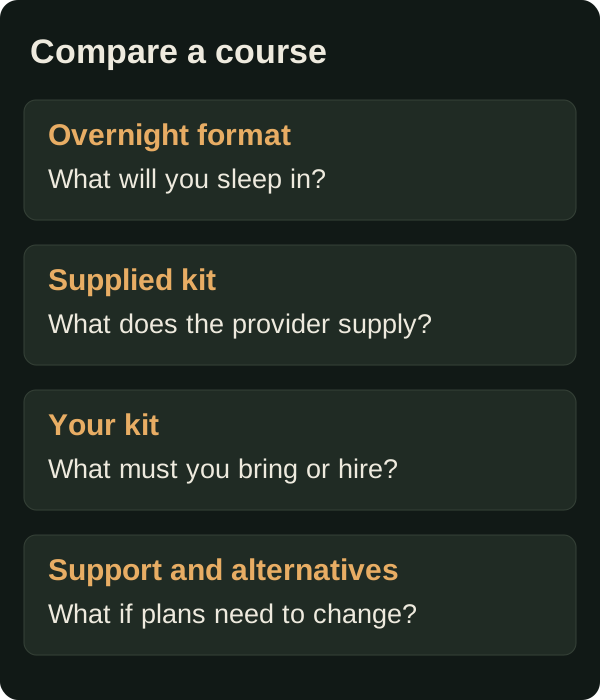
This table is a way to compare descriptions. It does not rate one shelter type as universally better than another.
Tarp shelters
Parks Canada describes tarps as equipment used for protection from sun, wind or rain. The label still does not tell you how a particular course uses them. Ask whether you will help set one up, receive feedback and sleep beneath it, or simply see a demonstration. Parks Canada: Tents and tarps ↗
Ask which components the provider supplies and whether you need personal sleeping equipment. A tarp in the syllabus is not evidence that a complete overnight kit is included.
Natural-material shelters
Ask whether building a shelter is a demonstration, a group exercise or an individual learning task, and whether sleeping in it is optional. Request the provider's explanation of material sourcing, land permission and how the activity is supervised.
A specific example is Woodland Ways' Oxfordshire weekend: the provider describes tarp use and a natural-shelter construction session. Use that detail to ask about the programme you would actually attend; the description is not an independent assessment of instruction quality. Woodland Ways: official weekend programme ↗
Sleeping systems
Compare the full arrangement: shelter, sleeping bag or other bedding, sleeping mat, dry storage and the clothing the provider asks you to bring. Mountaineering Scotland discusses tent suitability, sleeping bags, mats and keeping equipment dry in its camping guidance. Its setting is Scotland; it is not a specification for every climate or course. Mountaineering Scotland: Wild camping essentials ↗
Ask the instructor which equipment is suitable for the expected conditions and whether rental or a kit check is available. A kit list should answer those questions for your session. This guide does not prescribe a temperature rating or promise overnight comfort.
Campsite choice
Choosing a site is also a learning topic. Ask how the course covers weather exposure, ground conditions, environmental impact and local site requirements. Leave No Trace explains durable surfaces and limiting campsite impacts, including following local regulations. That guidance does not establish permission to camp or collect materials at a particular place. Leave No Trace: Travel & Camp on Durable Surfaces ↗
Questions to settle before booking
- What will I sleep in, and can that change during the course?
- Is an overnight stay required, optional or absent?
- Which shelter and sleeping items are supplied, borrowed or rented?
- What personal equipment do you require for the expected conditions?
- How much carrying and physical work is involved?
- How are the overnight activity and any alternatives supervised?
- What are the toilet, washing, privacy and accessibility arrangements?
- What happens if the weather changes or I need to stop?
- Which costs, teaching language, dates and meeting arrangements still need confirmation?
Make the comparison concrete
Illustrative comparison: a daytime workshop may meet a goal of trying a shelter task without an overnight stay. An overnight course may better match a wish to learn about camp routines, but only once you understand the equipment and support. A longer duration by itself does not answer those questions.
Before buying equipment, compare two kit lists with their providers. Mark each item as supplied, required from you, available to hire or still unknown. Include hire and other required extras when asking about the total cost.
Find instruction
Explore shelter-related training. Existing directory starting points include Woodland Ways and Jack Mountain Bushcraft School. Their official material describes shelter learning in different programme contexts. Check Jack Mountain's curriculum and programme distinction ↗ and the specific provider's current arrangements. A directory profile is not a verified place, booking or quality award.
About this guide
AI-assisted editorial course-selection guide. Sources checked 6 November 2026. No shelter or outdoor-skills instructor has reviewed this guide, and no participant or field-test evidence is claimed. This guide helps you compare learning opportunities and prepare questions for an instructor.